

Air conditioning isn’t a luxury in this part of the world. It runs in homes, malls, hospitals, hotels, and data centres almost every day of the year, which means someone has to install it, service it, and fix it when it fails. If you’re looking at an HVAC program in the UAE as a way into a steady, hands-on trade, you probably want straight answers: what will you actually learn, how long does it take, what does it cost, and will it lead to a real job?
This guide walks through all of that. By the end, you’ll know what an HVAC technician course covers, how to judge whether it suits the way you learn, and how to pick a program that’s worth your time and money.
What an HVAC program actually teaches you
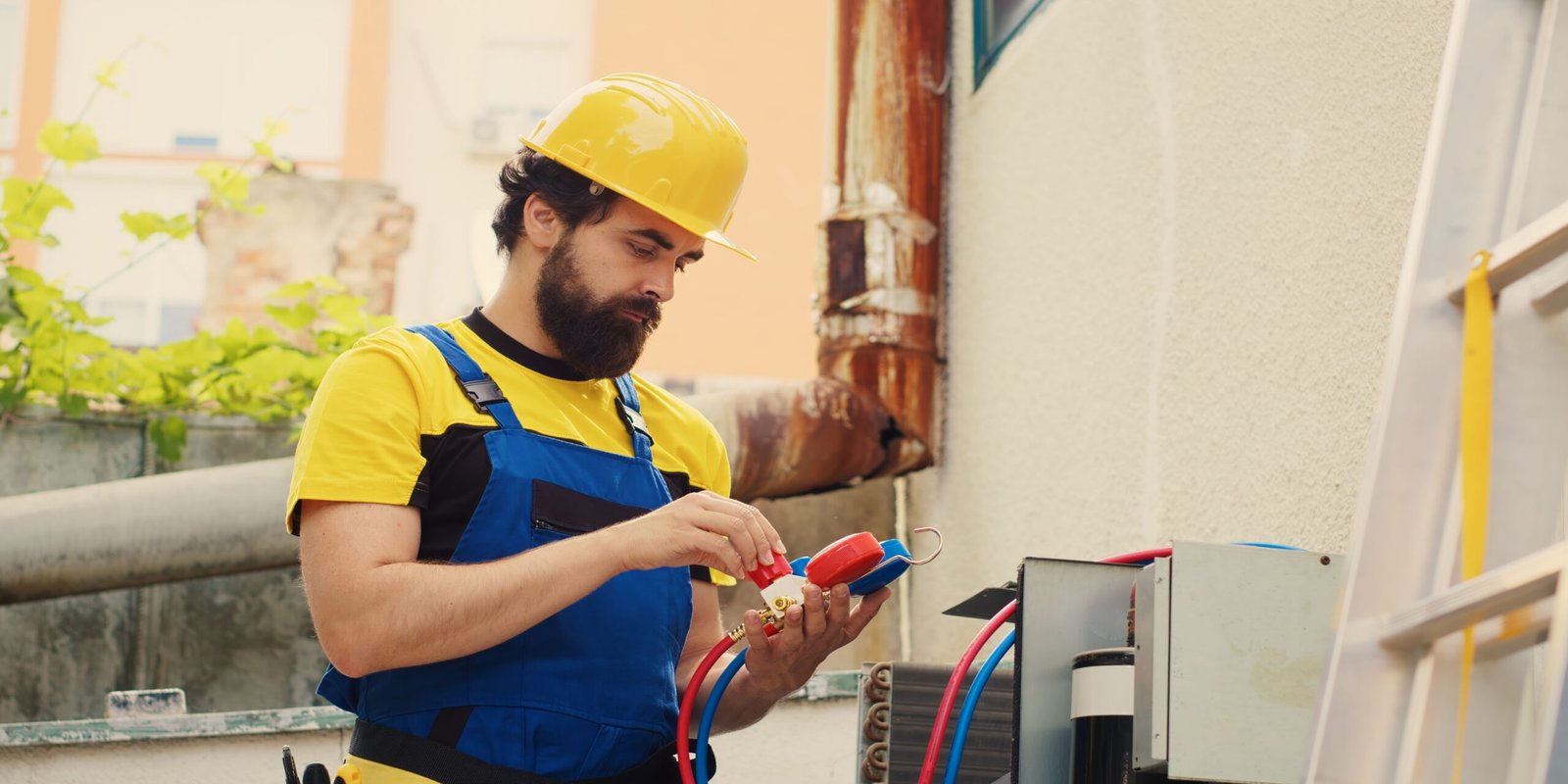
An HVAC program trains you to install, maintain, and repair heating, ventilation, air conditioning, and refrigeration systems. In the UAE, the emphasis sits heavily on cooling and refrigeration, but the core skills are the same set of mechanical, electrical, and diagnostic abilities that employers everywhere look for.
A solid HVAC technician training course usually covers:
- System fundamentals: how cooling, ventilation, heating, and refrigeration systems work, and the thermodynamics behind them.
- Installation: fitting split units, central systems, ducting, and refrigeration equipment in residential, commercial, and industrial settings.
- Maintenance and servicing: cleaning, inspecting, and tuning units so they run efficiently and last longer.
- Diagnostics and repair: finding the fault, not just guessing at it. This is where good HVAC repair training pays off on the job.
- HVAC electrical training: wiring, controls, load checking, and the safety procedures that go with working around live circuits.
- Refrigerant handling: safe practice with refrigerants, which matters more every year as the region moves toward low-GWP, energy-efficient systems.
The best programs lean hard on practice. Reading about a compressor and replacing one are different skills, and employers hire for the second. Look for HVAC practical training on real equipment rather than slides and a quiz at the end.
Why HVAC skills are in demand in the UAE
The case for this trade is simple and physical. The Gulf climate puts cooling systems under constant strain, so they need regular servicing, and they wear out. New towers, villas, schools, and industrial sites keep going up, and every one of them needs climate control installed and maintained.
There’s also a regulatory pull. Energy-efficiency rules from authorities like DEWA, alongside green building codes, push owners toward better-performing systems and the technicians who understand them. The move to low-GWP refrigerants and energy-efficient systems creates new jobs. A technician who can work confidently with modern, efficient equipment is more useful, and usually better paid, than one stuck on old habits.
A quick note on money: HVAC pay in the UAE varies a lot by role, experience, employer, and specialisation, and you’ll see wildly different figures quoted online. Treat any single number with caution. What’s consistent across the field is that earnings tend to climb with experience and recognised certifications, and that skilled, reliable technicians are not easy to replace.
How long does an HVAC program take, and what does it cost?
This is usually the first practical question, and the honest answer is that it depends on depth.
Short, focused courses can run a few weeks to a few months and aim to get you job-ready on core skills. More complete professional certifications often run longer to cover installation, electrical work, refrigeration, and diagnostics in proper detail. You’ll see options as a 3-month course, a 6-month HVAC program, and everything around that range. Shorter isn’t automatically worse, and longer isn’t automatically better; what matters is how much hands-on time you get and what you can do when you finish.
Cost works the same way. HVAC certification cost and HVAC training cost depend on the length of the program, how much practical equipment time is included, whether the qualification is recognised, and what support comes after. When you compare prices, compare what’s inside them. A slightly higher fee that buys real lab hours and proper assessment is often the better value. Ask ASTI Academy for a clear breakdown before you commit, and check whether they offer flexible payment options if that helps you plan.
HVAC technician certification: what it is and why it matters
Finishing a course and holding a certification aren’t quite the same thing. An HVAC technician certification is the proof you can show an employer, and it signals that you’ve been assessed against a standard rather than just sitting in a room for a few weeks.
For roles focused on cooling, a certified air conditioning technician credential carries weight, and refrigeration-specific certifications matter for anyone heading toward commercial or industrial work. Certification also gives you something to build on: as you add specialisations over the years, each recognised credential tends to open up better-paid, more technical work.
One thing worth checking early is whether the certificate is genuinely recognised by employers in the market you want to work in. A qualification that local employers know and trust does more for your CV than an impressive-sounding name they’ve never heard of.
Is an HVAC program right for you?
Not every course suits every person, and it’s better to know that before you enrol than after. An HVAC program tends to fit you well if:
- You learn by doing. If sitting through long lectures drains you but you light up the moment you’re working with your hands, this trade plays to your strengths.
- You want to start earning sooner. Vocational training gets you into work faster than a multi-year degree, without the same cost.
- You’re switching careers. Plenty of people move into HVAC from unrelated jobs. You don’t need an engineering background to begin, just a willingness to learn and a bit of physical stamina.
- You’re a school leaver weighing your options. A technical skill is a solid alternative to university, especially if a four-year course doesn’t appeal to you.
- You’re already working in MEP or maintenance and want a formal qualification to back up what you do.
The honest trade-offs: the work can be physical, sometimes in hot or tight spaces, and you’ll keep learning as technology changes. If that sounds fine to you, the path ahead is a good one.
How to choose the right HVAC program
Once you’ve decided the trade is for you, choosing the right vocational training institute is the decision that actually shapes your outcome. Use this checklist when you compare options:
- Recognition. Is the qualification recognised by employers and relevant authorities? Ask directly, and ask for specifics.
- Practical hours. How much time will you spend on real equipment versus theory? Favour programs built around hands-on work.
- What’s covered. Does it include the full picture- installation, maintenance, HVAC electrical training, refrigeration, and diagnostics – or only a slice?
- Trainers. Do the instructors have real field experience? People who’ve done the job teach it better.
- Assessment style. Are you graded by exams, by practical assignments, or both? Assignment-based, practical evaluation suits people who prefer to prove their skills by doing.
- Schedule and payment. Do the timings fit around your work or family? Are there flexible payment options? These details decide whether you can actually finish.
- After the course. Is there any career guidance or support once you graduate?
If you ask these seven questions at every institute you shortlist, the right choice usually becomes obvious.
A clearer path forward
A good HVAC program gives you a practical, in-demand skill in a region that runs on cooling, and the route in is far shorter than a university degree. Get the fundamentals, the hands-on practice, and a recognised certification, and you’ve got something to build a long career on.
If practical, exam-free learning sounds like the way you work best, it’s worth seeing how ASTI Academy’s professional certification programs are set up, with hands-on training, experienced trainers, and flexible timing and payment options. Have a look at the courses at ASTI Academy, or reach out to the team if you’d like to talk through which path fits you.
We have changed the lives of over 300,000 students since 1995. Now it’s your turn!
About ASTI Academy
ASTI Academy is a leading vocational training institute in Dubai, UAE. Offering Foundation Diploma, Engineering Diploma, and Job-Oriented Short Courses. Upon completing your courses, you will receive an internationally recognized certificate.
No Need for a career break; you can study online / part-time. Apply Now! For all other general inquiries, call us at 971 42809955 or email us at enquire@astiacademy.ac.ae
Check our Social media handles, Facebook, Instagram, LinkedIn, and Twitter, for more details. Click here to get all questions answered.