

In today’s fast-paced and highly competitive job market, a vocational qualification in engineering has become an increasingly popular choice for individuals aiming to kickstart their careers. Whether you decide to work in a reputed company quickly or enhance your existing skills, vocational engineering courses provide a practical, technical approach to learning that can significantly boost your career prospects. In this blog, we will explore how vocational engineering qualifications can shape your professional future, the benefits of practical experience, and how they align with industry needs.
Understanding Vocational Qualifications in Engineering
Vocational qualifications in engineering are designed to provide individuals with the technical skills and practical knowledge needed in various engineering fields. Unlike traditional degree programs that often emphasize theoretical knowledge, vocational qualifications focus more on real-world applications. This makes them attractive for those eager to dive into their careers with immediate, applicable skills.
In the UAE, vocational engineering programs, such as civil, electrical, mechanical, and automobile offer students the chance to learn engineering principles in a way that prepares them for industry challenges. These courses are carefully crafted to combine classroom learning with hands-on experience, ensuring students gain the technical proficiency needed to excel in fields like electrical, mechanical, civil, and electronic engineering.
By choosing vocational engineering courses, students don’t just learn concepts—they gain the expertise necessary to solve real-world engineering problems, which makes them highly employable right after graduation.
The Benefits of Practical Experience and Hands-On Training
One of the greatest advantages of pursuing a vocational qualification in engineering is the emphasis on practical experience. Vocational programs focus on experiential learning, which allows students to apply what they’ve learned in the classroom to real-world scenarios. This hands-on training is invaluable in ensuring that students understand engineering concepts and use tools and technologies commonly used in the industry.
Practical experience provides several key benefits:
- Improved Confidence: Students become more confident in their abilities by working on actual engineering projects. They are trained to tackle challenges head-on and can apply their knowledge without hesitation in real-world settings.
- Industry Readiness: Vocational engineering programs are designed to make students industry-ready. This means that upon completion, they can step directly into engineering roles, knowing how to handle various technical tasks that employers require.
- Increased Employability: Employers across the UAE, particularly in cities like Dubai, are constantly seeking candidates who can demonstrate hands-on experience. By enrolling in a vocational engineering diploma UAE, students show their potential employers that they are ready to perform tasks and contribute to projects right away.
How Vocational Qualifications Align with Industry Needs
Vocational qualifications in engineering are developed with close input from industry experts, ensuring that the curriculum is constantly aligned with current industry standards and evolving technology trends. As the engineering landscape changes with technological advancements, vocational programs can quickly adapt to include emerging tools, methodologies, and best practices.
This adaptability is crucial because it ensures that students are not just learning outdated concepts but are instead gaining skills that meet the demands of modern engineering roles. For instance, the introduction of automation and robotics in engineering has led vocational programs to incorporate these topics into their curriculum, preparing students for the high-tech environment they will encounter.
Vocational training also focuses on specific engineering disciplines, such as mechanical engineering, electrical engineering, and civil engineering. By offering tailored programs, such as Vocational Engineering Diploma courses in Dubai, these programs ensure that students acquire the precise skills needed for their chosen engineering sector.
Career Advancement Opportunities with an Engineering Qualification
The career benefits of a vocational qualification in engineering extend far beyond just entry-level positions. For many individuals, vocational training serves as the first step toward significant career advancement. Here’s how:
- Stepping Stone to Higher Roles: Vocational qualifications equip students with the practical skills necessary to secure entry-level positions in engineering. From there, individuals can advance within their organizations, take on more responsibility, and eventually, move into managerial roles or specialize in certain areas of engineering.
- Opportunities for Further Education: Many vocational engineering programs offer clear pathways for further education and specialization. Students can choose to pursue advanced certifications, higher diplomas, or even transition into degree programs. These opportunities can open doors to higher-paying jobs and more specialized roles within engineering fields.
- Increased Earning Potential: Holding a Vocational Engineering Diploma UAE often leads to better-paying job opportunities. As students gain experience and prove their competence, they are often able to negotiate higher salaries and take on more complex engineering tasks.
Transformations Through Vocational Training
The success stories of individuals who have completed vocational engineering qualifications are a testament to the power of practical training in transforming careers.
Student Story, Ahmed, a graduate of a vocational electrical engineering program, started his career as a junior technician in a small company. He quickly gained experience working on high-profile projects. Within a few years, he was promoted to a managerial position, overseeing a team of engineers.
Such success stories show that vocational engineering qualifications do more than just prepare students for a job—they can change lives by offering the chance to grow professionally and personally. Whether it’s transitioning into leadership roles or changing sectors, vocational qualifications open the door to multiple career paths.
Why Choose Vocational Engineering Qualifications in the UAE?

The UAE, and especially Dubai, has become a hub for innovation and development in engineering. With the rise of new industries and infrastructure projects, the demand for skilled engineers is higher than ever. Vocational engineering courses are uniquely positioned to help individuals meet this demand by offering tailored programs that directly address the skills needed in these booming industries.
If you’re looking to pursue a career in engineering, enrolling in Vocational Engineering Courses in Dubai can set you on the right path. Not only will you gain the practical skills required by top employers, but you’ll also be prepared to adapt to the ever-changing technological landscape of engineering. Whether you’re interested in mechanical, civil, or electrical engineering, there are a wide range of engineering diploma programs in UAE that cater to every interest and ambition.
A vocational qualification in engineering offers many benefits, including practical training, industry alignment, and career advancement opportunities. By focusing on real-world applications and technical proficiency, vocational programs equip students with the skills needed to thrive in the engineering sector. These qualifications allow individuals to enter the workforce with confidence, making them attractive candidates for employers looking for industry-ready professionals. With the rapidly evolving engineering landscape, vocational qualifications are more valuable than ever in shaping a successful career in engineering.
If you’re ready to take the next step in your engineering career, consider enrolling in Vocational Engineering Courses in Dubai and gain the skills that will propel your career forward. Whether you’re starting your journey or looking to advance, a vocational engineering qualification is a key step toward achieving your career goals.
We have changed the lives of over 300,000 students since 1995. Now it’s your turn!
About ASTI Academy
ASTI Academy is a leading vocational training institute in Dubai, UAE. Offering Foundation Diploma, Engineering Diploma, and Job-Oriented Short Courses. You will receive a globally recognized certificate upon completion of your courses.
No Need for a career break; you can study online / part-time. Apply Now! For all other general inquiries, call us at 971 42809955 or email us at enquire@astiacademy.ac.ae
Check our Social media handles, Facebook, Instagram, Linkedin, and Twitter, for more details. Click here to get all questions answered.

 The UAE offers a unique environment for career growth, with its thriving economy and increasing demand for skilled professionals. Enrolling in a
 From climate change to the conservation of natural resources, sustainability tops many of the discussions worldwide. Because of this factor, EVs are also in great demand. Thus, this field of electric Vehicle Engineering needs skilled professionals more than ever. A 6-month course in Electric Vehicle Engineering will detail the design, repair, and maintenance of electric vehicles. You will study battery technology, charging infrastructure, and energy management which will eventually equip you to play a very important role in the growing push for green energy solutions in the UAE.
  With the continuous improvement in the technology of the automotive sector, the demand for skilled professionals who can diagnose and repair modern vehicles is rising. You will be able to study the use of advanced diagnostic tools and technologies within a 6-month course in automotive diagnostics. Since cars are becoming increasingly complicated, this skill is quite essential for professionals to thrive in an evolving automotive industry. Graduates of this course will therefore be sought after by car dealerships, repair shops, and manufacturing plants.
  Welding is one of the most essential skills required in any industry, whether it is construction, manufacturing, or oil and gas. A 6-month course in Dubai on welding and technology will practically introduce one to various techniques of welding, namely MIG, TIG, and arc welding. You will also gain a firm understanding of the industrial safety protocols and norms followed, which is so vital during work with sectors requiring high-precision work. This course will be ideal for those whose aim is to enter industries where welding forms a vital part of material, infrastructure, and machinery production.
 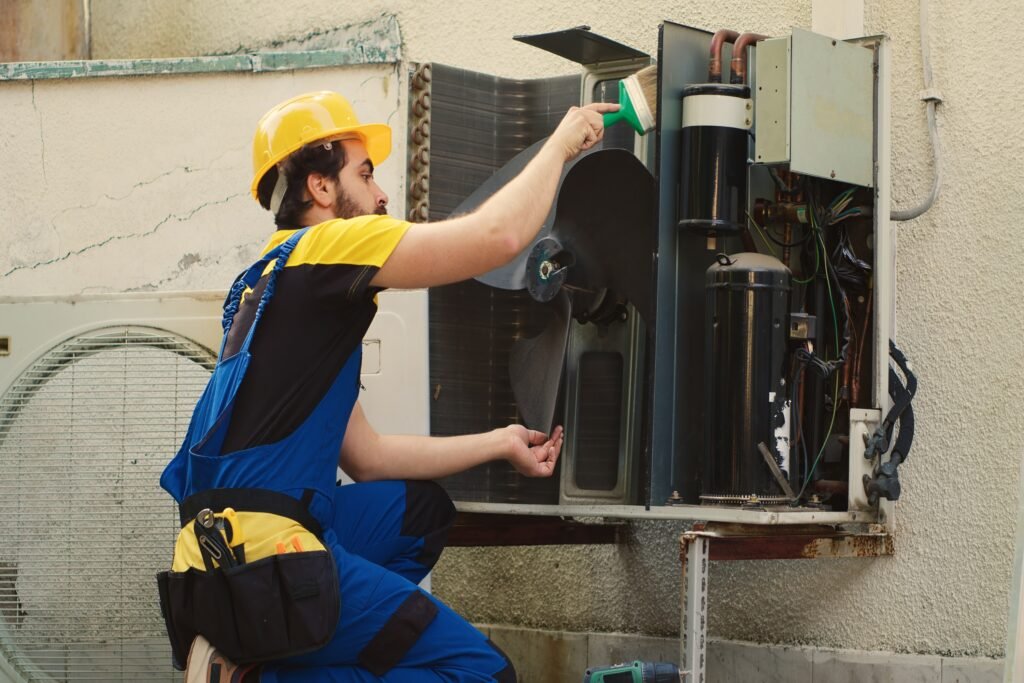 Due to the very hot climate in Dubai, one can’t imagine a residential and commercial building that doesn’t have an HVAC system. A 6-month course in HVAC will teach you how to install, design, and maintain such critical systems. You will learn all about refrigeration, air conditioning, and state-of-the-art energy-efficient technologies, thus making you an asset in a city where control of temperature is paramount. HVAC professionals are sought-after with businesses and homes continuously looking for a solution toward sustained and cost-effective climate control.
 Façade engineering is a niche and specialized area within the construction and design of buildings, relating only to the ‘skin’ or external cladding. As Dubai is still growing in height, façade engineers are necessary to create these towering monsters with functional and aesthetic integrity. A 6-month façade engineering course will cover everything from design to material and construction methodologies involved in modern facades. Construction in Dubai continues unabated, and façade engineers are needed to help shape the city’s architectural identity.
 Dubai’s rapid development as a global business center has also led to the rise of several key trends in the accounting profession. As businesses continue to innovate, accountants must stay up-to-date with the latest developments in technology and regulatory standards. Pursuing an accounting course in Dubai incorporating these trends will give you a competitive edge.
 The UAE is emerging as a global hub for world-class education, with several advantages accruing to the students:
 Students who study in a hospitality management course in Dubai will also be taught the following relevant subjects that are affecting the industry:
 At ASTI Academy, we take pleasure in the quality of our business management courses, which prepare students to face professional challenges.


 As industries evolve, staying ahead requires awareness of emerging trends. Some key areas gaining traction include: